

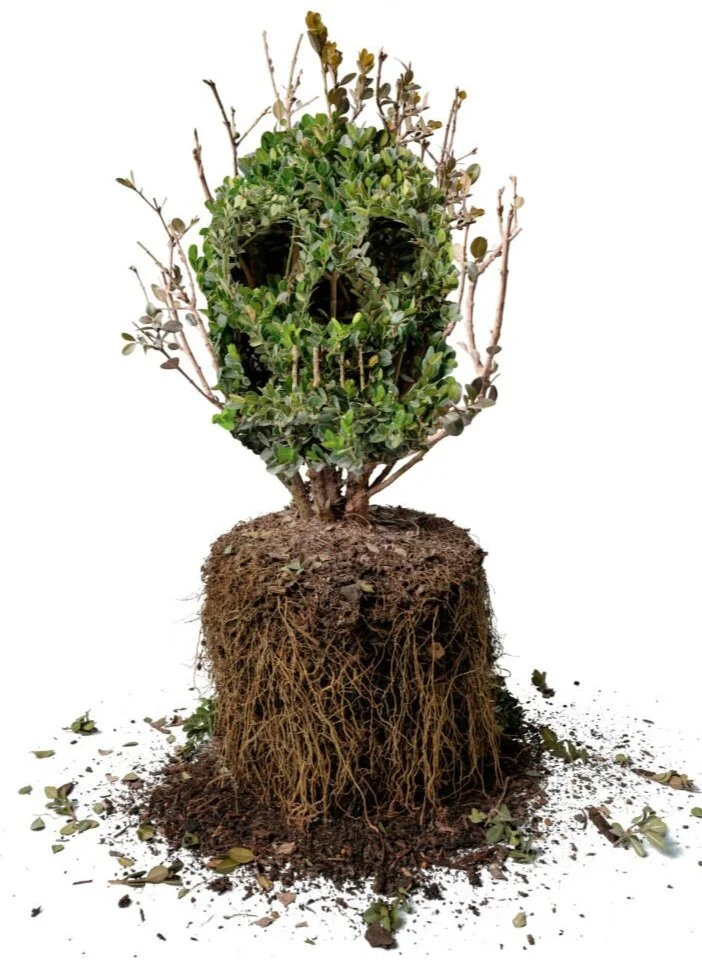
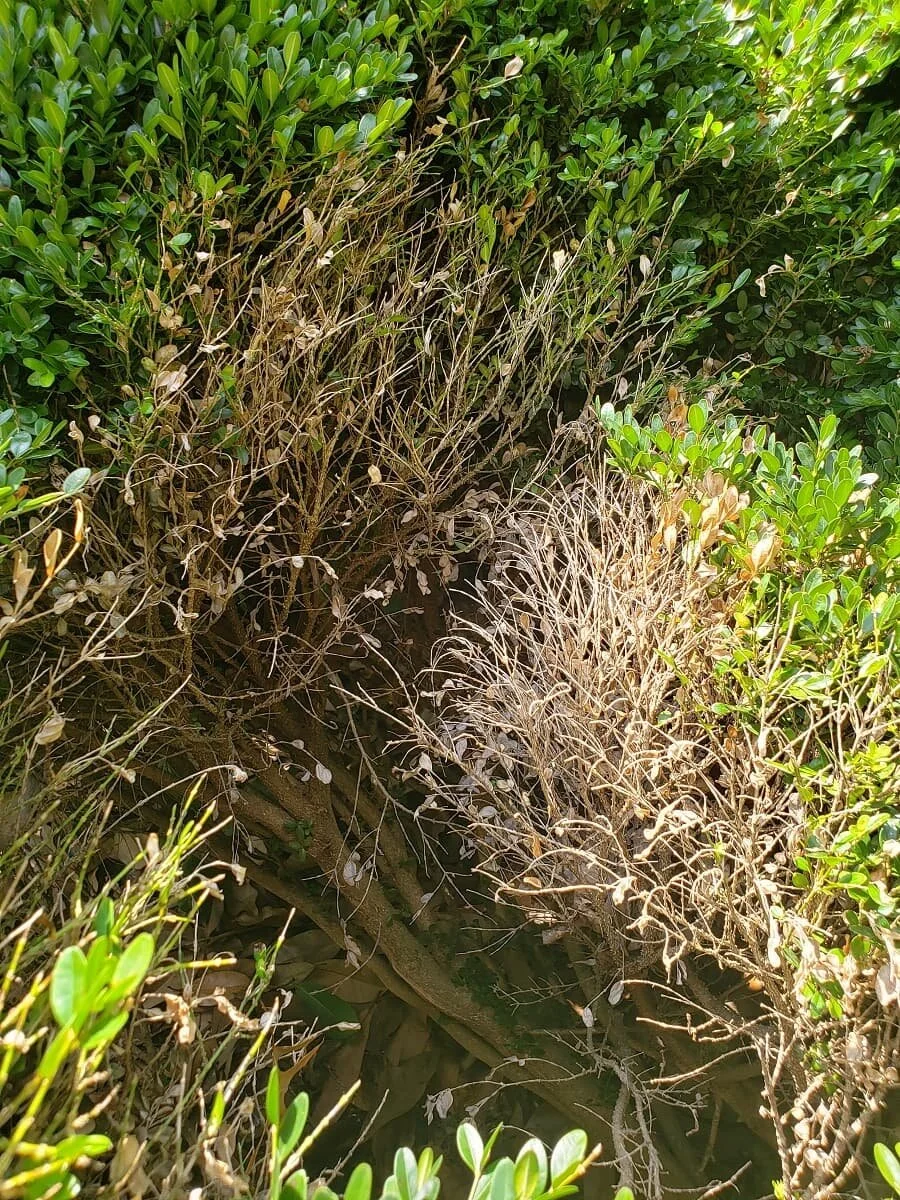
Boxwood Blight is a fast-moving, destructive, and incurable fungal disease. Boxwood Blight reached the United States in 2011, initially affecting North Carolina and Connecticut. It can now be found in at least twenty states and several Canadian provinces. Boxwood Blight already has a strong foothold in Winston-Salem, and is beginning to be seen in the Greensboro area. It is devastating to all boxwood types (English, American, Korean/Japanese), including varieties and cultivars initially thought to be resistant. New Garden Landscaping & Nursery feels that Boxwood Blight could have a major impact on landscapes containing boxwood in the near future. Here’s what you need to know about the disease.
Boxwood Blight spreads very easily via the sticky fungal spores. These spores can cling to and be spread by people, tools, clothing, and wild (deer, birds, rabbits etc.) and domestic (dogs, cats, horses etc.) animals. It can also be spread by water droplets or flooding. Often it is introduced from boxwood being added to a landscape, where rain-splashed droplets move it from infected additions to the original plants. Due to their stickiness, spores are not thought to be spread by wind.
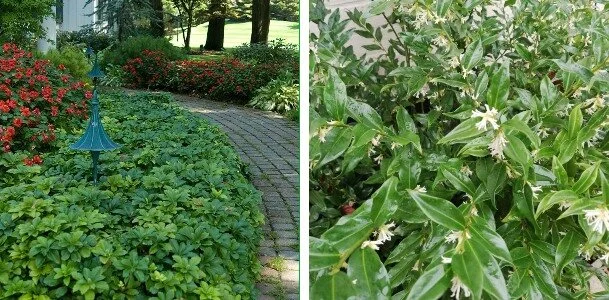
Infected plants become symptomatic in a matter of weeks. The disease causes defoliation of affected stems, and most importantly, if an area/landscape becomes infected, boxwood can never be planted there again as it will inevitably succumb to the disease. It also can become established with minimal symptoms on boxwood relatives Pachysandra and sweetbox (Sarcococca). This can create a disease reservoir on a property that does not have boxwood on it that can affect neighboring properties.
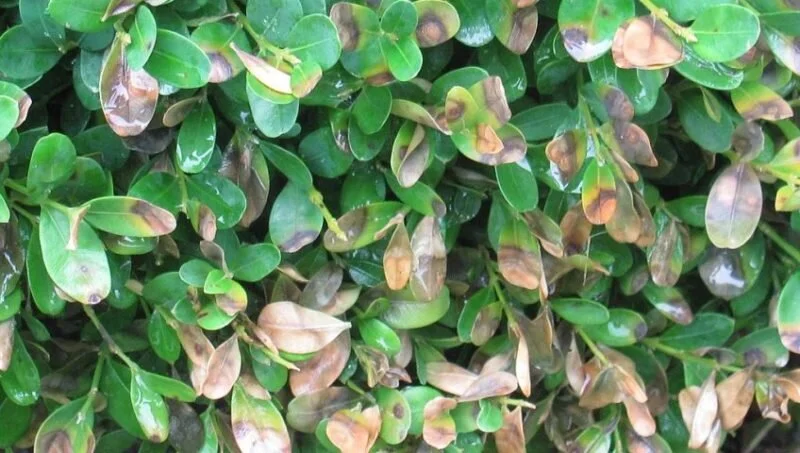
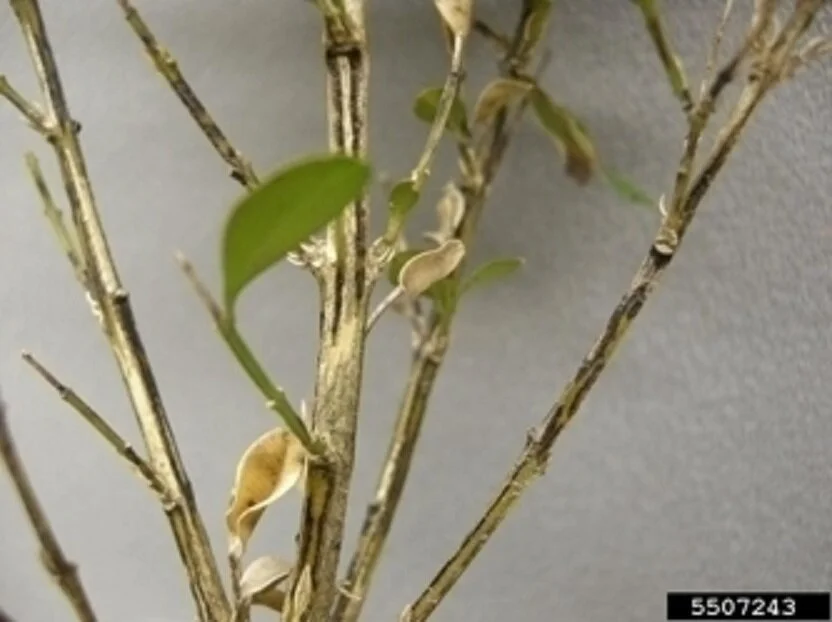
Initial symptoms of boxwood blight include circular, tan leaf spots with a dark purple or brown border. The leaf spots may or may not have yellow to reddish halos surrounding the spot. Black stem lesions or blackening of the stems is often seen. Infected leaves become tan and drop from the stems in sections, with defoliation happening rapidly. The speed of defoliation is one characteristic that indicates Boxwood Blight rather than another boxwood disease. One reason that it has spread so quickly is that some boxwood, particularly varieties that until recently were thought to be “resistant”, show only the stem lesions for a period, which remain hidden within the shrub’s leaf canopy. Without close inspection, these infected carrier plants may be planted and spread the disease.
Shady, warm and humid conditions seem to favor development of Boxwood Blight, but it has been seen in almost every combination of conditions. It may slow during periods of hot, dry weather or when fungicides are applied, but it is not stopped. Proper hand pruning (by opening the leaf canopy to allow improved air movement and better light penetration into the interior of the shrub) may improve resistance and slow spread of the Blight in two ways:
Colletotrichum stem canker (link) also produces back stem lesions, but does not produce rapid defoliation
Volutella blight (link), root stress, nematodes, and Phytophthora (link), also cause leaves to turn tan, but the leaves generally remain on the plant.
There is no cure; control measures are limited, expensive and must be continued indefinitely. Once infected, boxwood will never recover and will eventually need to be removed. For this reason, New Garden Landscaping & Nursery is implementing a Boxwood Blight response plan:
If you have boxwood in your landscape, you can take the following measures to keep your boxwood as healthy as possible, hopefully slowing development of the disease.
Have a question or want to discuss your property? Fill out the form below, and we’ll get back to you as soon as we can!